Home / Craft fair checklist
Craft fair checklist
Everything to pack for a craft fair or Christmas market: 71 things for your booth, payments, packaging and comfort, with extras for crochet, knitting and paper goods. Tick as you pack; it remembers.
Stock and cash planner
Your ticks and numbers are saved on this device only. Nothing is uploaded.
How much stock should I bring to a craft fair?
A common rule of thumb, from craft business guides such as Craftybase, is to bring two to three times what you expect to sell. A full table sells better than a sparse one, and you can't sell what you left at home. To guess what you'll sell, divide the amount you hope to take by your typical price: $400 at $20 an item is about 20 sales, so bring 40 to 60 pieces. The planner above does this sum for you.
Bring a range of prices, too. Small things like coasters, bookmarks, cards and ornaments are easy yes-purchases, while blankets and big shawls draw people in even when they don't sell. Our own rule of thumb is about half your pieces at the lowest price band, a third in the middle and the rest as bigger showpieces. It's a starting point; after one or two fairs, your sales notebook will tell you what your buyers like.
How much cash float do I need?
Most sellers start with around $50 to $100 in small notes and coins, which is the range Craftybase suggests. Round prices make change easy: $20 instead of $19.50 means you rarely need coins. Keep the float on you in an apron or pouch, and take card payments too, since many shoppers carry little cash.
How should I price items for a craft fair?
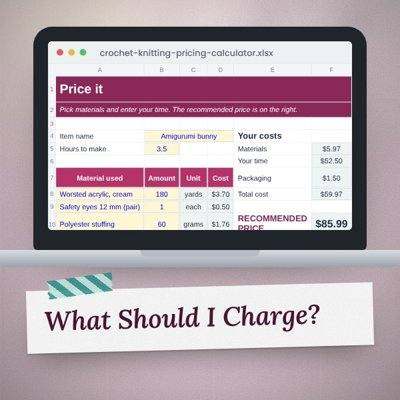
First check the fair can pay: the craft fair profit calculator shows how many sales cover the booth fee. Then price them the same way you would online: materials, your time at an hourly rate, a little for overheads, and the booth fee shared across what you expect to sell. Our guide on how to price crochet and knitted items has a calculator with a craft fair option. Fairs have no Etsy fees, but card readers take a small cut of each sale, so leave room for that.
How do I set up a craft fair booth?
- Use height. Crates, shelves and stands lift items to eye level and make a table look full.
- Group by type and price. All hats together under one price sign is easier to shop than a mix.
- Leave the front edge open for people to pick things up, and keep spare stock under the table.
- Show how things look in use. A beanie on a stand, a shawl draped, a junk journal open on a page.
- Practise at home and take a photo, so set-up on the day takes minutes, not an hour.
What do I need for an outdoor craft fair?
A pop-up canopy, side walls, rain covers and, above all, weights on every leg. Annie Andre's craft fair guide suggests at least 15 lb per leg in windy spots, with 20 lb better; buckets of sand or bags of gravel work. Paper goods need extra care outdoors: keep stock in plastic tubs, display cards in clear sleeves and use clips or small weights so a gust doesn't take them.
Selling crochet, knitting or junk journals at a fair
Handmade yarn goods sell on touch, so let people handle a swatch or a sample rather than every piece. Put sizes on wearables and keep a small size card handy for gift buyers (our hat size chart has the numbers). Working on a project at the booth gives people a reason to stop and chat, and a "custom orders welcome" sign turns that chat into orders later. For junk journals, keep one sample to flip through and the rest wrapped. Planning what to make before the fair? The handmade gift planner shows how many pieces you can finish in time.
Checklist and tips drawn from Craftybase's craft show checklist (stock of two to three times expected sales, a $50 to $100 float, a price on every item, test the card reader), Made Urban's craft show preparation timeline, and Annie Andre's craft fair checklist (round prices for easy change, floor-length table covers, 15 to 20 lb tent weights). The yarn and paper extras, the price-band split and all wording are our own.
Questions crafters ask
What should I bring to my first craft fair?
A table and floor-length cloth, display risers, a sign with your shop name, prices on every item, a charged card reader and phone, a cash float in small notes, bags, business cards, a fix-it kit (tape, scissors, safety pins), and water, snacks and warm layers for yourself.
How much inventory should I bring to a craft fair?
A common rule of thumb is two to three times what you expect to sell. Divide your sales goal by your typical price to estimate sales: $400 at $20 an item is about 20 sales, so bring 40 to 60 pieces across a range of prices.
How much change should I bring to a craft fair?
Around $50 to $100 in small notes and coins is a common starting float. Round prices to whole dollars so you rarely need coins, and take card payments too.
Do I need a card reader for a craft fair?
It's strongly recommended, as many shoppers carry little cash. A phone card reader is cheap; charge it, bring a power bank, and test a sale at home before the day.
How heavy should tent weights be at a craft fair?
At least 15 lb per leg is a common minimum in windy places, with 20 lb or more better. Many fairs require weights on every leg, so check the rules.
What sells well at craft fairs for crocheters?
Small, giftable items at lower prices tend to move quickly, like ornaments, coasters, hats and small toys, with a few larger showpieces to draw people in. Keep notes on what sells and adjust for the next fair.
Free printable sampler
Journaling cards, a vintage ephemera sheet and a planner page from our shop, free to print. Plus new freebies and pattern ideas now and then.
Free. No spam, unsubscribe in one click. See our privacy policy.